Posted Date : July 28, 2026
Category : Renting Guides
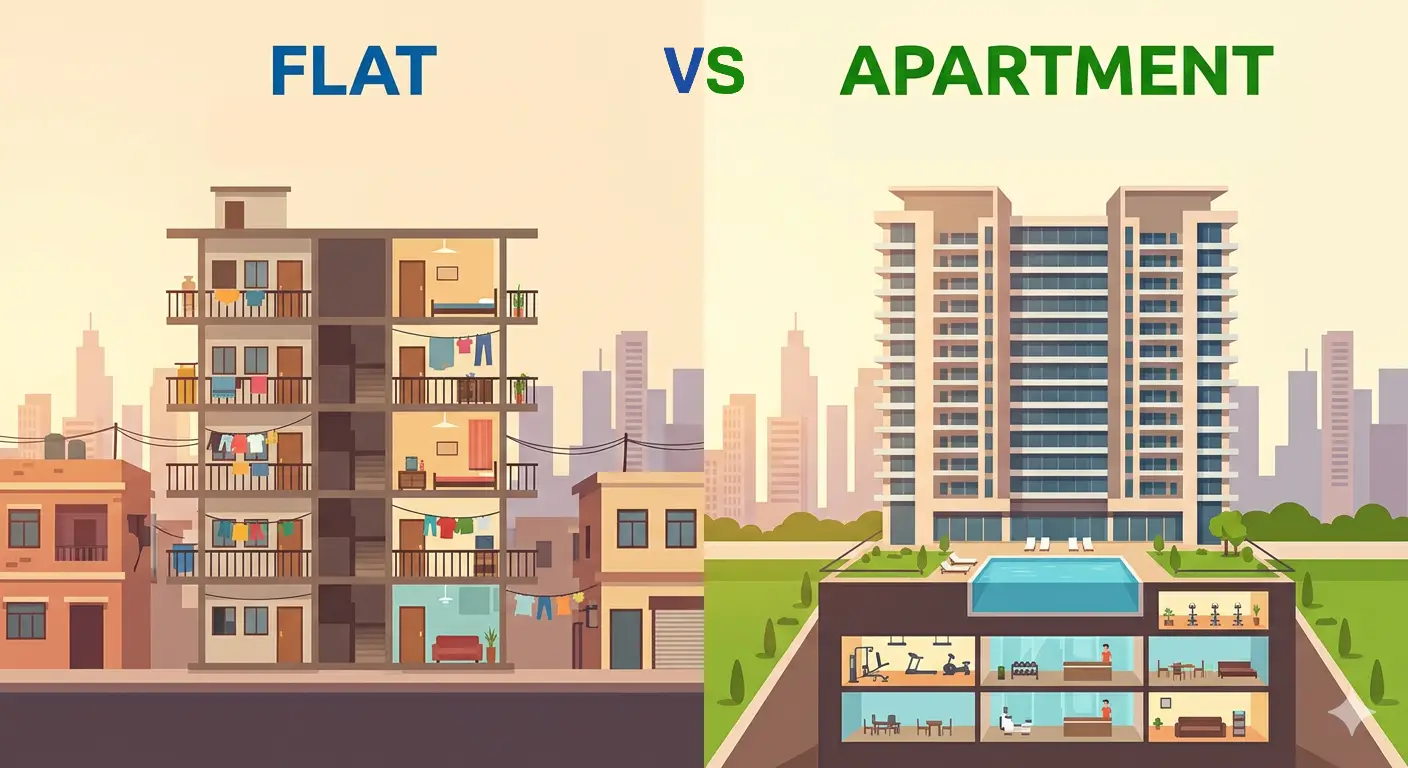
In India, a flat and an apartment are structurally the same thing, a residential unit inside a multi-storey building. The real difference between a flat and an apartment comes down to amenities and pricing, not legal status. Flats are usually older, simpler buildings with basic facilities like water supply and parking. Apartments are newer, gated projects with security, gyms, clubhouses, and power backup. So when you compare flats vs apartments, you're really comparing a no-frills home to a lifestyle-driven one.
Ask ten people in Mumbai or Bangalore what the difference is between a flat and an apartment, and you'll probably get ten different answers. Some will say it's just a language thing, flat is British English, apartment is American English. Others will insist apartments come with a swimming pool and flats don't.
Here's the honest answer: both terms describe the same kind of property under Indian law. There's no separate flat ownership act and apartment ownership act. What changes is how builders use the words, and what buyers and tenants have come to expect from each.
This matters more than it sounds like, especially if you're comparing rent or resale value between two properties that are priced very differently despite looking similar on paper. Understanding what actually separates a flat from an apartment in India, in terms of amenities, target buyers, and pricing, will help you make a decision that fits your budget and your lifestyle, whether you're renting in Pune, buying in Hyderabad, or scrolling listings in Thane.
A flat is an individual housing unit inside a residential building, usually a low-rise or mid-rise structure. The word has been part of Indian real estate vocabulary for decades, and you'll still hear it used a lot in cities like Kolkata, Chennai, and older parts of Mumbai and Delhi.
Most flats were built in the 1980s, 90s, and early 2000s, before gated townships became the norm. They're common in standalone buildings that don't have a management society running a clubhouse or a swimming pool, just a functioning building with basic upkeep.
None of this makes a flat a lesser home. In tier-2 and tier-3 cities especially, flats are still the most practical and affordable way to own or rent a place, precisely because you're not paying for amenities you may never use.
An apartment is technically the same thing, a self-contained unit in a multi-storey building, but the word has come to mean something more specific in India's current real estate market. Apartments are usually part of larger, professionally managed complexes, the kind you'd find in newer developments across Whitefield, Hinjewadi, Gachibowli, or Thane.
Builders lean on the word "apartment" when they want to signal that a project comes with more than just four walls and a roof.
If a flat is a home, an apartment is often marketed as a lifestyle. That's not just branding either, the added facilities do come at a real cost, both upfront and in monthly maintenance.
Structurally, there's almost nothing separating a flat from an apartment in India. Both are individual units within a larger building, governed by the same property laws. The difference between a flat and an apartment shows up in five practical areas.
"Flat" comes from British English and has been used in Indian real estate since long before organised townships existed. "Apartment" is the newer, more urban-sounding term that developers now prefer for fresh launches.
A flat gives you the basics, water, parking, and a roof over your head. An apartment usually throws in security, power backup, a gym, and shared green spaces, sometimes even a co-working lounge or a jogging track depending on the project.
Flats are generally aimed at budget and mid-income buyers. Apartments target upper-middle-class and premium buyers who are willing to pay more for convenience and status.
Apartments cost more, sometimes 20-40% more per square foot compared to older flats in the same locality, mainly because of the amenities, branding, and newer construction.
No difference here. Whether your sale deed says "flat" or "apartment," you're governed by the same ownership laws, RERA rules, and society regulations. A flat vs apartment difference on paper doesn't exist legally, it's a market perception, not a legal category.
So when someone asks what is the difference between a flat and an apartment, the short version is: same legal structure, different amenities, different pricing, and different branding.
Your budget, both upfront and ongoing. It's not just the purchase price or rent, factor in monthly maintenance too. An apartment that looks affordable on the base price can turn expensive once you add society charges.
In established city cores like South Mumbai or old Pune, flats are more common. In IT corridors like Electronic City or Kharadi, apartments dominate simply because that's what's being built.
A gym membership sitting unused doesn't justify the extra rent you're paying for it. Be honest about your lifestyle before paying for someone else's.
If you're buying as an investment, apartments in metro cities generally attract quicker resale interest and higher rental demand from young professionals.
Kids who'll use a play area, elderly parents who'd value 24/7 security, these are real reasons to lean towards an apartment, not just aesthetic ones.
Regardless of whether it's called a flat or an apartment, always verify RERA registration, check the builder's delivery track record, and confirm all legal clearances before signing anything.
There isn't a universal winner here, and anyone claiming otherwise is probably selling you something. A flat and an apartment serve different priorities.
If you want a functional, no-fuss home without paying for facilities you won't use, a flat still makes sense, especially outside the top metros. If security, community amenities, and long-term resale value matter more to you, an apartment is usually the better fit, even at a higher cost.
A quick way to think about it:
The flat vs apartment difference plays out differently depending on where you're house-hunting.
New projects in Thane, Andheri, and Powai are almost entirely marketed as apartments, often within gated townships. A project like Piramal Mahalaxmi is a good example of how modern apartment complexes bundle in security, amenities, and community living in a way older standalone flats simply don't. Older buildings in the suburbs are still called flats by long-time residents.
Tech corridors like Whitefield and Electronic City are dominated by apartment complexes, largely because IT professionals prefer gated living. Older central Bangalore still has plenty of standalone flats.
Gachibowli and Kondapur are almost entirely apartment territory now, driven by the IT boom and steady price appreciation in these micro-markets.
Hinjewadi and Kharadi are apartment-heavy zones popular with the IT crowd, with townships like Life Republic showing why professionals are willing to pay more for integrated amenities, while older residential pockets of the city still offer flats at more accessible price points.
Flats remain the more common and more affordable choice, though premium apartment projects are steadily entering these markets too.
The pattern across cities is consistent, apartments dominate wherever there's strong job growth and younger, working professionals looking to rent. Flats hold their ground in older, established neighbourhoods and smaller cities where price sensitivity matters more than amenities.
At the end of the day, the difference between a flat and an apartment in India isn't about square footage or legal ownership, it's about what's included and what you're paying for. Flats keep things simple and affordable. Apartments bundle in security, lifestyle amenities, and community living, at a cost.
Neither is objectively better. The right choice depends on your budget, how long you plan to stay, and what you actually need from your home rather than what looks good on a brochure.
If you're comparing flats vs apartments in India and want verified listings that match your budget and location, RentMax can help you shortlist options without the guesswork, from basic flats to fully-amenitised apartments across Mumbai, Thane, and Pune.
No. Both are treated identically under Indian property law, RERA regulations, and housing society rules. The distinction is about branding and amenities, not legal status.
Apartments typically include security systems, power backup, clubhouses, and landscaped common areas. These features raise both the purchase price and the ongoing maintenance charges.
In most cases, yes, because maintenance fees cover lifts, security staff, gyms, pools, and landscaping, none of which typically exist in standalone flat buildings.
Apartments in metro cities usually attract higher rental demand and faster tenant turnaround, largely because tenants are willing to pay more for security and amenities. Once you've zeroed in on a tenant, it also helps to know the stamp duty and registration charges for rent agreements so there are no surprises at signing.
Not really. The term depends on the building's design and shared facilities as a whole, not on individual unit upgrades. A standalone building without a clubhouse or managed security will still be seen as a flat, regardless of how the interior looks.
No. Home loan eligibility and terms depend on the property's value, location, legal clearances, and the borrower's profile, not on whether the property is labelled a flat or an apartment.
A flat and an apartment are both units within a shared multi-storey building. A villa is a standalone or row house with its own plot, private entrance, and no shared walls with neighbouring units.